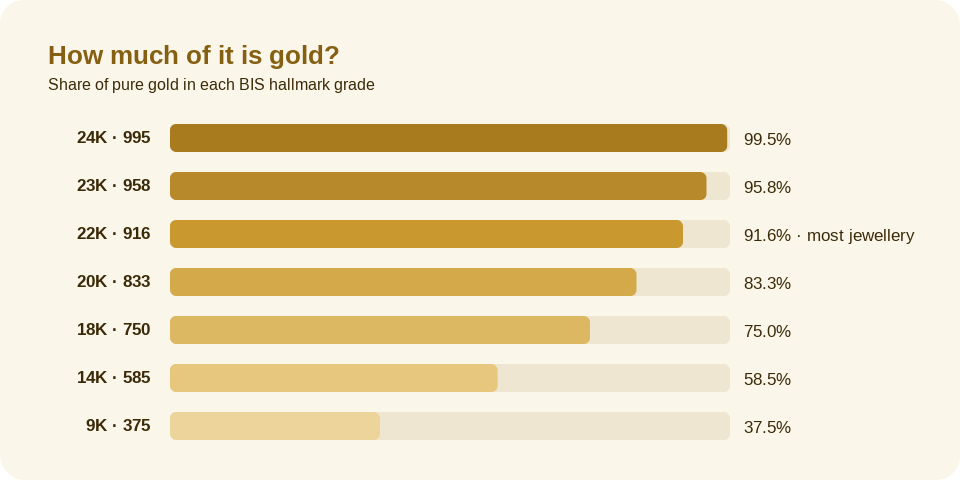
Karat measures how much of a piece is pure gold, out of 24 parts. 24 karat is as close to pure as gold gets; 22 karat is 22 parts gold and 2 parts other metals, usually copper and silver, which is why the hallmark for 22K reads 916: 916 parts of gold in every 1,000. The lower the karat, the harder the metal and the lower the price.
What each purity costs today
| Purity | Per gram | Per 10 grams | Share of the 24K price |
|---|---|---|---|
| 24K | ₹12,927 | ₹1,29,270 | 100.0% |
| 22K | ₹11,850 | ₹1,18,500 | 91.7% |
| 18K | ₹9,695 | ₹96,950 | 75.0% |
India rates for 28 November 2026, before GST and making charges. See today's rate or pick your city.
24K: for coins and bars
24K gold is soft and bends and scratches easily, so it is rarely made into jewellery for daily wear. It is the purity of gold coins and bars, which are usually 999 (99.9%) or 995 fineness, and it is the "24K" figure quoted in daily rates, including TrueGoldRate's. Hallmarked 24K jewellery is graded 24K995.
22K: the Indian jewellery standard
22K, marked 916, is what most Indian gold jewellery is made from: bangles, chains, necklaces, wedding sets. The small share of alloy makes it hard enough to wear every day while keeping the deep yellow colour buyers expect. When people in India talk about "the gold rate" for jewellery, they usually mean the 22K rate.
18K and below: for stones and everyday pieces
18K (750) is harder still, which helps it hold diamonds and other stones securely, so most diamond jewellery is 18K. 14K (585) and 9K (375) cost less again and are used for lightweight and fashion pieces. 9K became a mandatory hallmark grade in July 2025.
Which should you buy?
- Jewellery you will wear: 22K, unless it is set with stones.
- Diamond or stone-set jewellery: 18K.
- Gold kept as savings: 24K coins or bars carry much lower making charges than jewellery, so more of what you pay is gold. See how making charges work.
Whatever you choose, check that the purity is hallmarked and the HUID verifies: see how to read a HUID hallmark. When you later sell or exchange a piece, the jeweller tests its purity and pays for the gold content, not the karat printed on the bill.